Pickleball, Tennis, and Running Injuries in the Lowcountry: When to See a Chiropractor Instead of Just Resting It Off
Many pickleball, tennis, and running injuries in the Lowcountry improve faster with an early chiropractic evaluation than with rest alone. Main Street Chiropractic in Hilton Head Island helps active patients tell the difference between an injury that needs professional sports injury treatment and one that will resolve with simple self-care.
Why Pickleball, Tennis, and Running Injuries Are So Common in the Lowcountry
Hilton Head Island, Bluffton, and the surrounding Lowcountry have become a hub for pickleball, tennis, and year-round running, thanks to a mild climate that lets active patients play and train almost every month of the year. That consistency is great for fitness, but it also means the body rarely gets a true off-season to recover from repetitive impact and quick, multidirectional movement.
Pickleball and tennis both demand fast lateral movement, sudden stops, and repetitive overhead or side-arm motion, which places stress on the knees, hips, shoulders, and lower back. Running, meanwhile, delivers thousands of repetitive impact cycles through the feet, knees, hips, and spine over the course of a single week of training. Left unaddressed, these repetitive stresses show up as ankle sprains, shin splints, plantar fasciitis, runner’s knee, IT band syndrome, and tennis elbow, all conditions our doctors regularly treat.
Should I Rest It Off, or See a Chiropractor?
Rest has its place, but resting alone often just delays a problem rather than resolving it, especially when the underlying issue is a joint misalignment or muscle imbalance rather than simple soreness. A twisted ankle that keeps swelling, a knee that clicks or gives way, or a lower back that stays stiff for more than a few days after a match are all signs that the injury involves more than temporary fatigue.
- Pain that lasts more than three days without improving
- Swelling, stiffness, or reduced range of motion that does not settle with rest
- Pain that changes how you walk, swing, or serve, even subtly
- An injury that keeps recurring in the same spot after previous rest periods
- Numbness, tingling, or weakness anywhere in the arm or leg
How Long After an Injury Should You See a Chiropractor in Hilton Head Island SC?
Patients should not wait more than three days after a pickleball, tennis, or running injury to be seen. The sooner treatment begins, the faster the body can start healing correctly, and the lower the risk of developing chronic pain or a compensatory injury from favoring the affected side. Waiting too long allows inflammation to set in and joints to stiffen, which typically makes recovery slower and more complicated.
Main Street Chiropractic offers flexible and same-day appointments for active patients across Hilton Head Island, Bluffton, Beaufort, and the wider Lowcountry, so a nagging pickleball or running injury does not have to sideline an entire season.
What Does Chiropractic Treatment for These Injuries Look Like?
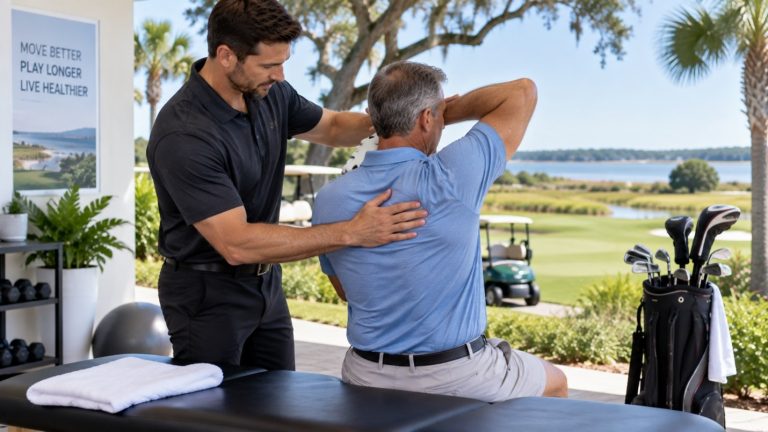
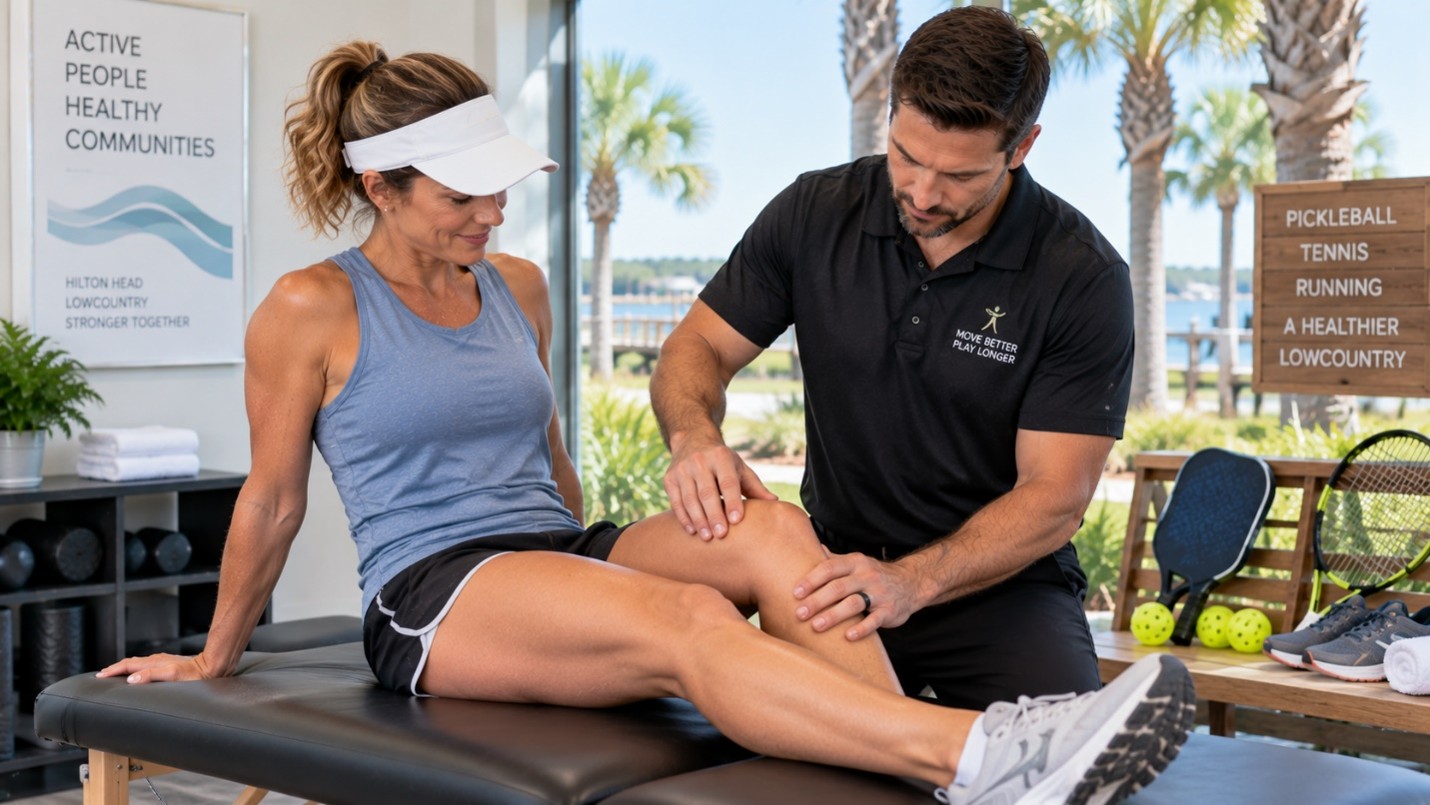
Care typically starts with an assessment of the injured area alongside the joints and muscles that support it, since a knee problem, for example, can often be traced back to hip or ankle mechanics. From there, doctors combine precise spinal and joint adjustments with Class IV Laser Therapy to reduce pain and inflammation, and corrective exercises to rebuild strength and stability once the initial irritation has calmed.
This same framework applies whether the injury came from a hard-fought pickleball match, a tennis tournament, or a long training run, and it is the same approach used across our broader sports injury treatment services. Most minor strains and sprains improve within two to four weeks of consistent care, while more complex injuries involving multiple structures can take six to twelve weeks.
Preventing Repeat Injuries on the Court and the Road
- Warm up hips, ankles, and shoulders before matches or runs, not just the muscles you feel working
- Rotate playing surfaces and running routes when possible to vary repetitive stress patterns
- Address a nagging ache early instead of playing or training through it for several more weeks
- Build a consistent corrective exercise routine to support joints during high-volume seasons
When an Injury Needs Medical Attention Before Chiropractic Care
Most pickleball, tennis, and running injuries respond well to conservative chiropractic care, but a few situations call for a medical doctor or emergency room first. These include a visibly deformed joint, an inability to bear any weight on the leg, sudden severe swelling with intense pain, or numbness and weakness that appears suddenly and does not improve. Chiropractic care works best as part of a complete recovery plan, alongside medical care when it is needed.
Common Injuries We Treat Across Pickleball, Tennis, and Running
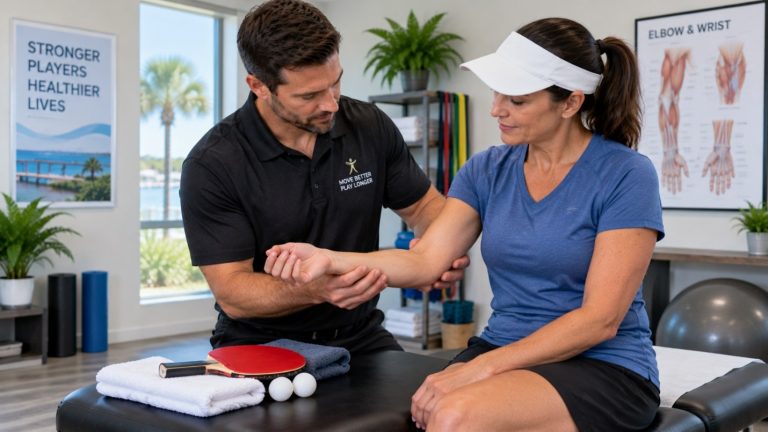
Pickleball and tennis players in the Lowcountry frequently come in with ankle sprains from quick lateral direction changes, tennis elbow from repetitive overhead and side-arm strokes, shoulder impingement from serving motion, and lower back tightness from rotational strain during groundstrokes and dinks at the net.
Runners, meanwhile, tend to present with runner’s knee, IT band syndrome along the outer thigh and knee, shin splints from repetitive impact, and plantar fasciitis affecting the bottom of the foot. Many of these conditions share a common thread: an underlying joint restriction or muscle imbalance that concentrates stress in one area rather than distributing it evenly, which is exactly what a chiropractic evaluation is designed to uncover.
How Does Chiropractic Care Fit Alongside Physiotherapy and Corrective Exercise?
Chiropractic adjustments and physiotherapy are not competing approaches, they work well together as part of one coordinated plan. Adjustments address joint restrictions and misalignment directly, while physiotherapy techniques such as electrical muscle stimulation, heat therapy, and mechanical traction help calm surrounding soft tissue and support the healing process between visits.
Corrective exercise rounds out the plan by rebuilding the strength and stability needed to keep an injury from returning once symptoms resolve. For an active pickleball, tennis, or running patient in Hilton Head Island, this combination is often more effective than any single approach used in isolation, since it addresses both the immediate irritation and the underlying mechanical cause.
What to Expect at Your First Visit in Hilton Head Island
The first appointment includes a conversation about how and when the injury happened, how often you play or run, and what specifically makes the pain better or worse. A hands-on assessment then checks the injured area along with the joints above and below it, since a hip restriction, for example, can quietly change how load travels down through the knee and ankle.
From there, doctors explain what they found in plain language and outline a realistic timeline for recovery based on the specific injury, not a generic estimate. Most patients leave the first visit with a clear next step, whether that is beginning treatment immediately or simply monitoring symptoms for a few more days.
Why the Lowcountry’s Year-Round Playing Season Raises the Stakes
In much of the country, a cold winter naturally forces a break from outdoor sports, giving joints and tendons time to recover from a full season of play. In Hilton Head Island, Bluffton, and the surrounding Lowcountry, mild winters mean many pickleball players, tennis players, and runners keep training at a similar volume all year long, with far less built-in recovery time between seasons.
This is a major reason overuse injuries are so common locally, and it also means proactive care matters more here than in climates with a true off-season. A maintenance visit every few months, even without an acute injury, can help catch small restrictions before they turn into the kind of nagging problem that sidelines an entire summer of activity.
Cross-Training Habits That Reduce Injury Risk
Playing the same sport at high volume week after week, without any variation, is one of the most common contributors to overuse injuries in active Lowcountry patients. Mixing in low-impact cross-training, such as swimming or cycling, gives overworked joints and tendons a break while still maintaining overall fitness between pickleball, tennis, or running sessions.
Doctors often build these recommendations directly into a personalized recovery plan, not as an afterthought, since preventing the next injury is just as important as fully resolving the current one for active Lowcountry patients.
Schedule a Same-Day Evaluation in Hilton Head Island
Whether the injury happened on the pickleball court, the tennis court, or mile four of a morning run, our Hilton Head Island team can help identify the cause and build a plan to get back to full activity. Contact Main Street Chiropractic today to schedule an evaluation before a manageable injury turns into a season-ending one.