Class IV Laser Therapy for Chronic Pain in Hilton Head Island, SC: Benefits, Risks, and Results
Class IV laser therapy may offer modest, short-term relief for some chronic muscle and joint pain, but results vary and research is mixed. It delivers higher-power light to sore tissue in a process called photobiomodulation. At our Hilton Head Island office, it is one part of a broader pain management plan. To see how it compares with lower-power devices, read our guide to Class IV vs. cold laser therapy.
What Is Class IV Laser Therapy and How Does Photobiomodulation Work?
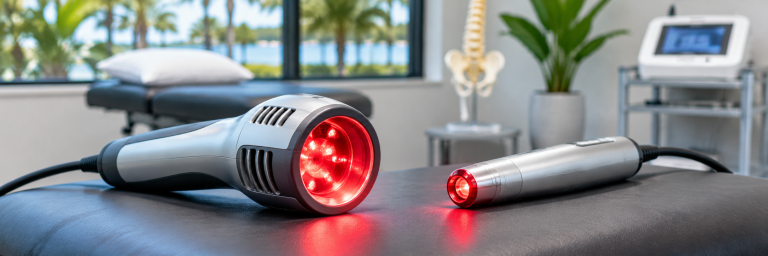
Class IV laser therapy uses red and near-infrared light, delivered above 500 milliwatts, to reach muscles, tendons, and joints. The biological effect is called photobiomodulation. Researchers believe the light is absorbed by a mitochondrial enzyme called cytochrome c oxidase, which may support cellular energy production, calm local inflammation, and change how pain signals are processed. A 2024 review in the Journal of Functional Morphology and Kinesiology describes this model as promising but still being studied, and it notes that treatment settings vary widely from study to study. Class IV lasers are not the same as surgical lasers. They are designed to warm tissue gently rather than cut or burn it, and most people feel only mild warmth. Lower-power Class 3B devices, often called cold lasers, use the same basic idea with less power per second. Because the science is still developing, laser therapy is usually offered as one piece of a plan that also includes movement and self-care.
What Does FDA Clearance Mean for Class IV Laser Therapy?
Therapeutic lasers are FDA cleared through the 510(k) process, which is different from FDA approval. Clearance means the agency found a device substantially equivalent to one already on the market for a stated use. For pain lasers, that cleared use is typically temporary relief of minor muscle and joint pain and stiffness, and a temporary increase in local blood circulation. Clearance does not mean the FDA has confirmed that a laser treats arthritis, nerve damage, or any specific disease. Be cautious of marketing that suggests otherwise. The FDA also lists Class IV lasers as an immediate eye and skin hazard from direct or reflected light, which is why patients and staff wear protective goggles during every session. Insurers view these devices conservatively as well. Cigna’s 2026 coverage policy, for example, lists high-power Class IV laser therapy as experimental or unproven, so it is often an out-of-pocket service. Ask before you start.
Does Class IV Laser Therapy Actually Help Chronic Pain?
The honest answer is that laser therapy may help some people a little, for some conditions, for a limited time. Most high-quality research studies lower-power lasers, and results for Class IV devices are newer and smaller. The 2017 American College of Physicians guideline lists low-level laser therapy among options for chronic low back pain, based on low-quality evidence of minimal pain improvement compared with sham treatment. Studies of neck pain, knee arthritis, and tendon problems show similar mixed findings. Dose, wavelength, and the number of sessions appear to matter, and there is no agreed standard protocol yet. Laser therapy does not rebuild cartilage, heal discs, or replace exercise. People with chronic lower back pain or neck pain usually see the most benefit when laser care is paired with active rehab. Key findings include:
• A 2015 meta-analysis in Arthritis Research and Therapy (7 trials, 394 patients) found lower pain scores than placebo for chronic low back pain, with no clear change in disability.
• A 2021 systematic review in Physiotherapy Quarterly (7 trials) reported less pain and better function with Class IV laser, but called for agreement on dosing.
• A 2024 review in Lasers in Medical Science (12 trials, 704 participants) found no clear advantage of high-intensity over low-level laser.
• Most trials follow people for weeks to a few months, so long-term results are uncertain.
What Happens During a Class IV Laser Session in Hilton Head Island?
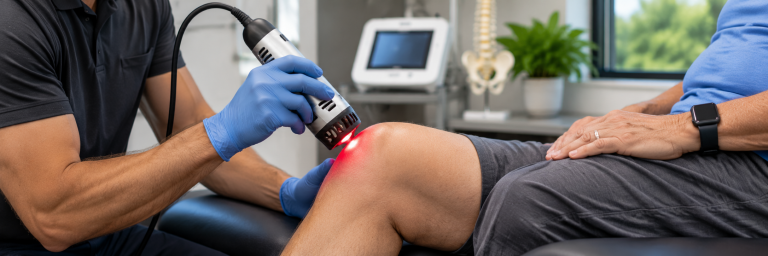
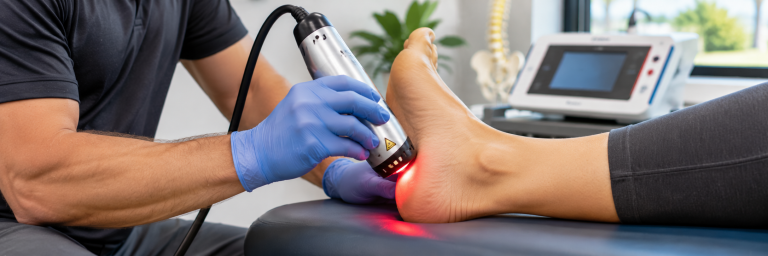
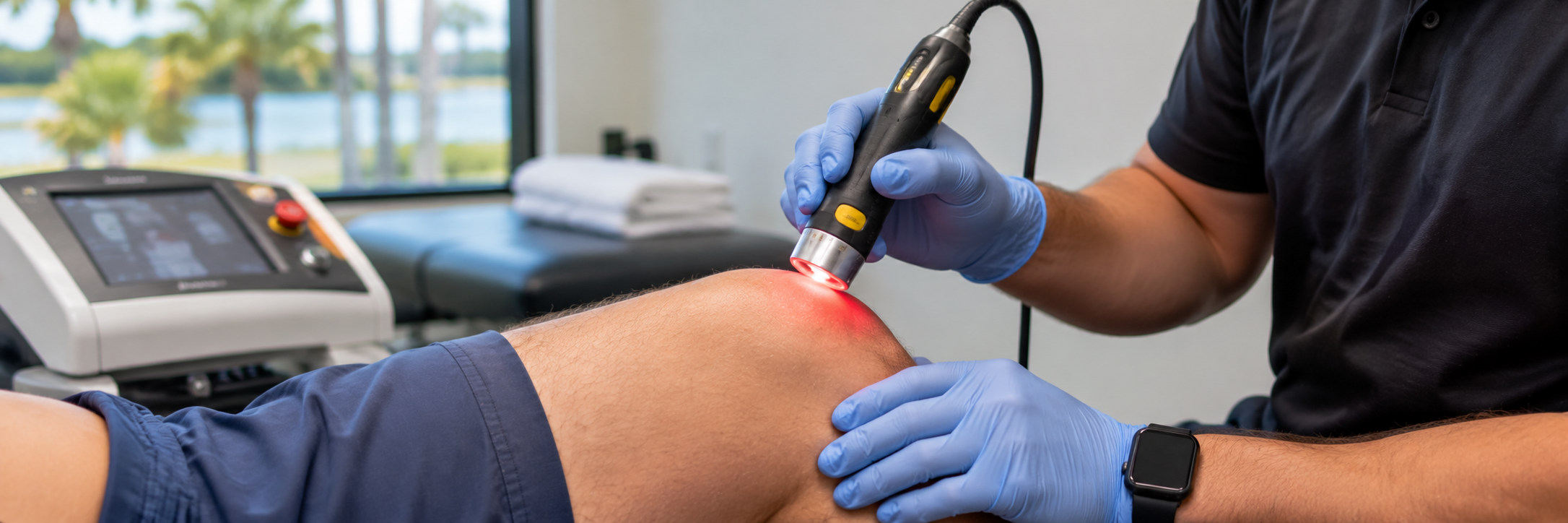
A typical Class IV laser session in Hilton Head Island is short and painless for most people. After a history and exam, the treated area is uncovered, and you and the provider put on wavelength-specific safety goggles. The provider then moves a handpiece over the skin, keeping it in motion so heat does not build in one spot. Each area often takes a few minutes to around 10 minutes, depending on its size and the dose being delivered. You should feel gentle warmth, never burning. Tell the provider at once if the area feels hot. Because research uses many different protocols, there is no single standard course. Many clinics, including ours, reassess after a short series of visits over a few weeks and continue only if you are improving. If nothing has changed after that trial, it is reasonable to stop and consider other options. Results vary, and responses differ from person to person.
What Are the Side Effects, and Who Should Avoid Laser Therapy?
Side effects of Class IV laser therapy are uncommon and usually mild, but the higher power calls for real precautions. The most common complaints are temporary warmth, mild redness, or a brief increase in soreness after the first session or two. Burns are possible if the beam is held in one spot or used over skin that cannot sense heat. Eye injury is the most serious risk, so goggles are not optional. Your provider should screen you for the conditions below before any session and skip or adjust treatment when needed. If you have an implanted medical device, take photosensitizing medicine, have diabetes with reduced foot sensation, or are unsure about a condition, ask your physician first. Common contraindications and precautions include:
• Pregnancy, with no treatment over the abdomen or lower back
• Known or suspected cancer in or near the treatment area
• Direct exposure of the eyes, or treatment near the thyroid gland
• Areas with reduced sensation, fresh tattoos, or photosensitizing medications
• Open or bleeding wounds unless a physician has approved care
When Should Chronic Pain Be Checked by a Medical Doctor First?
Some pain needs a medical evaluation before any laser or chiropractic care. Chronic pain is common, and most of it comes from muscles, joints, and tendons, but certain symptoms can point to infection, fracture, nerve compression, or other serious problems. Laser therapy should not delay diagnosis of those conditions. Pain that keeps getting worse, spreads into an arm or leg, or changes character also deserves a fresh look by a physician, even if it started as a simple strain. If you notice any of the warning signs below, contact your physician, visit urgent care, or call 911 when symptoms are sudden or severe. Our team also refers patients to medical care when an exam suggests something outside the scope of chiropractic. Seek medical care promptly if you have:
• New loss of bladder or bowel control, or numbness in the groin or inner thighs
• Progressive weakness, numbness, or trouble walking
• Fever, chills, or a hot, red, swollen joint
• Pain after a fall, car accident, or other trauma
• Unexplained weight loss, a history of cancer, or night pain that does not ease with rest
How Can Main Street Chiropractic Help With Class IV Laser Therapy in Hilton Head Island, SC?
Main Street Chiropractic has more than a decade of experience helping people manage pain in the Lowcountry. Before recommending Class IV laser therapy, our chiropractor completes an exam and health history to understand your symptoms, medications, and goals, and to screen for reasons laser care may not fit. When your symptoms call for imaging, medication, or another specialist, we coordinate with your physicians. Laser sessions are usually paired with adjustments, movement, and home exercises rather than used alone, and results vary. We serve Hilton Head Island, Bluffton, and Sun City from 92 Main Street, Suite D, Hilton Head Island, SC 29926. We accept most major insurance plans, so ask about yours, including whether laser care is covered. Call 843-342-3333 or use our online scheduling page to request a visit. This article is for general information and is not medical advice.
Frequently Asked Questions About Class IV Laser Therapy
Most people feel only gentle warmth during Class IV laser therapy. The handpiece stays in motion so heat does not build in one spot. If an area ever feels hot or uncomfortable, tell your provider right away so they can adjust the settings or move the handpiece. Mild soreness for a day after the first visit can happen and usually fades on its own.
There is no single standard course, because studies use many different doses and schedules. Many clinics recommend a short trial series over a few weeks, then reassess pain and function. If you are not improving after that trial, it is reasonable to stop. Results vary, and chronic conditions may respond more slowly than recent strains or sprains.
Often it is not. Many insurers consider high-power laser therapy experimental or unproven for pain, so it is frequently billed as an out-of-pocket service. Coverage depends on your specific plan, and some people use health savings or flexible spending accounts. Ask the office and your insurer before starting so there are no surprises when you receive a bill.
No treatment can promise that. Class IV laser therapy may ease pain for some people, but it does not rebuild cartilage, repair discs, or treat the cause of every condition. Decisions about medication, injections, or surgery belong with your physician. Laser care is usually most useful as one part of a plan that includes exercise and other conservative treatment.
Many older adults can receive Class IV laser therapy safely after screening. Providers take extra care over areas with reduced sensation, thin skin, or poor circulation, and they review medications that increase light sensitivity. Anyone with a history of cancer, a pacemaker, or unexplained symptoms should talk with their physician first. Eye protection is required for every patient, regardless of age.
Some people notice less stiffness within a few sessions, while others feel little change. Studies generally measure results over several weeks, and benefits often appear gradually when laser care is combined with exercise and movement. If your pain is worsening, or new symptoms such as weakness or numbness appear, stop and contact your physician rather than waiting to see if it improves.