Class IV Laser Therapy vs. Cold Laser Therapy: What Is the Difference in Hilton Head Island, SC?
The main difference is power. Cold lasers are usually Class 3B devices that emit up to 500 milliwatts, while Class IV lasers exceed 500 milliwatts, treat larger areas faster, and produce gentle warmth. Research has not shown that more power works better, because dose matters more. Learn more about Class IV laser therapy for chronic pain and our pain management services.
What Is the Difference Between Class IV Laser Therapy and Cold Laser Therapy?
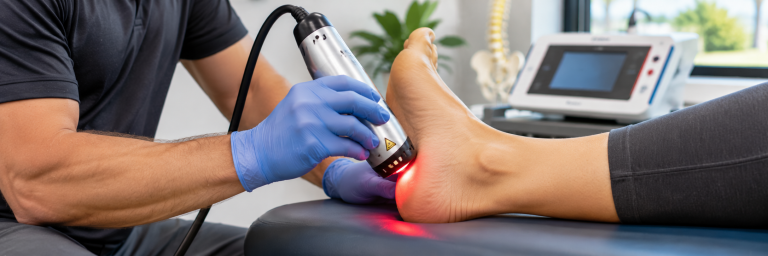
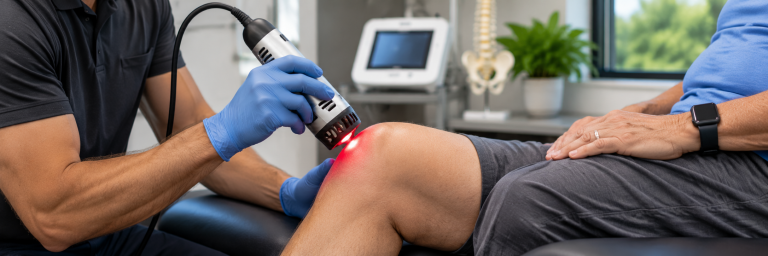
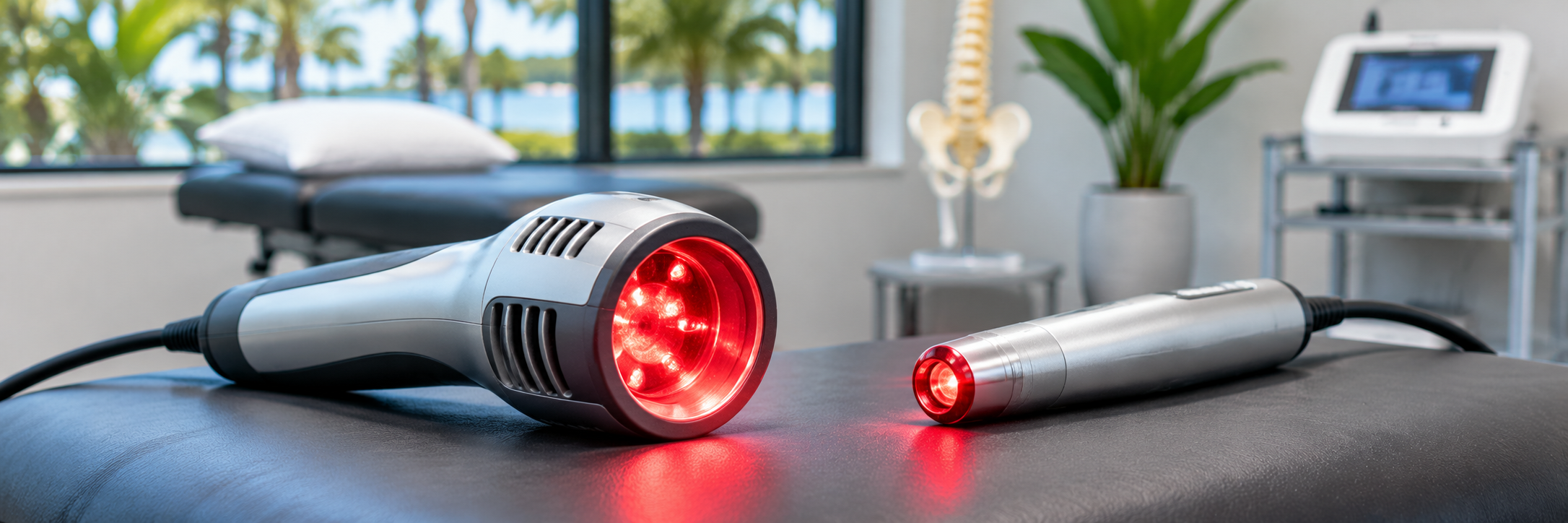
Both therapies use red or near-infrared light to produce photobiomodulation, a biological response that may ease pain and inflammation in muscles, tendons, and joints. The key difference is how much power the device delivers. Cold lasers, also called low-level lasers, are usually Class 3B devices that emit less than 500 milliwatts and produce little or no warmth. Class IV lasers, sometimes called high-intensity lasers, emit more than 500 milliwatts, so they can deliver a set amount of energy in less time and often feel warm on the skin. More power does not change what light does inside a cell. It mainly changes how quickly energy is delivered and how much safety control the session needs. Neither type is a surgical laser, and both are FDA cleared, not approved, for temporary relief of minor muscle and joint pain. Results vary with either option.
How Do FDA and IEC Laser Classes Define Class 3B and Class 4?
Laser classes describe hazard level, not treatment quality. The FDA and the International Electrotechnical Commission (IEC) group lasers by how much harm their beam can cause. The two classes used in clinics, Class 3B and Class 4, both require eye protection, but Class 4 carries extra risks. Laser safety programs, such as the University of California, Berkeley’s, list the power limits below. The FDA describes Class IV as an immediate hazard to eyes and skin from direct or reflected light, with a possible fire hazard. Understanding the class helps you know what precautions to expect during a session. It does not tell you whether a device will relieve your pain, because the dose and the condition matter more. Here is how the classes compare:
• Class 3R: 1 to 5 milliwatts, a low hazard used in some pointers
• Class 3B: 5 to 500 milliwatts, a direct beam hazard to the eyes
• Class 4: above 500 milliwatts, a direct and reflected beam hazard to eyes and skin
• Both 3B and 4 require wavelength-specific goggles for everyone in the room
Does a Class IV Laser Reach Deeper Tissue and Shorten Session Time?
Higher power can push more light past the skin in a shorter time, which is one reason Class IV lasers are marketed for deeper or larger areas such as the hip or low back. Depth also depends on wavelength, skin tone, and tissue type, and most light is absorbed or scattered within the first few centimeters regardless of device. Cold laser sessions can take longer to deliver the same total energy, especially over a large area, because the device emits less power. Class IV sessions often take a few minutes per area, with the handpiece kept moving to prevent heat buildup. That warmth is a side effect of power, not proof that treatment is working. A 2024 review in the Journal of Functional Morphology and Kinesiology noted that many cold laser studies may have used doses that were too low, which suggests the right dose, not the device class alone, drives results.
Is Class IV Laser Better Than Cold Laser Therapy in Hilton Head Island?
Current evidence does not show that one class is clearly better. A 2024 systematic review in Lasers in Medical Science examined 12 randomized trials with 704 participants and found no clear superiority of high-intensity over low-level laser for musculoskeletal disorders. Small differences showed up on certain measures, but the authors called for larger studies. What appears to matter more is the dose, meaning the total energy delivered, along with wavelength, treatment area, and number of sessions. Treatment guidance from the World Association for Photobiomodulation Therapy has long emphasized dosing ranges rather than device power. The 2017 American College of Physicians guideline rates evidence for low-level laser in chronic low back pain as low quality, showing minimal pain improvement. For people in Hilton Head Island deciding between options, the practical question is whether a provider uses a sensible dose, screens carefully, and pairs laser care with exercise and movement.
Is Laser Therapy Safe, and When Should You See a Doctor Instead?
Both laser types are considered low risk when used correctly, but Class IV devices need closer attention because of heat and eye hazards. Mild warmth, redness, or brief soreness are the most common effects. Burns can occur if the handpiece stays in one spot or is used over skin with reduced sensation. Laser therapy also should not delay a medical diagnosis. People with a history of cancer, an implanted device, diabetes with reduced sensation, or medicines that increase light sensitivity should talk with their physician first. Pain that keeps getting worse, or spreads with numbness, also needs a medical evaluation. Your provider should screen for contraindications, and you should seek medical care first when warning signs appear. Watch for these precautions and red flags:
• Avoid treatment over a pregnant abdomen, known cancer, the eyes, or the thyroid gland.
• Wear wavelength-specific goggles for the entire session.
• Report any burning or heat right away.
• Seek urgent care for new bladder or bowel changes, numbness in the groin, or progressive weakness.
• See a physician for fever, a hot swollen joint, pain after trauma, or unexplained weight loss.
How Much Does Laser Therapy Cost, and Will Insurance Pay for It?
Laser therapy prices vary by clinic, region, and session length, and there is no reliable published average for either type. Class IV equipment usually costs a clinic more to buy and maintain, and some offices price sessions accordingly, while others bundle laser care with adjustments. Insurance coverage is limited for both. Cigna’s 2026 coverage policy, for example, lists low-level laser therapy as not medically necessary for musculoskeletal pain and high-power Class IV laser therapy as experimental or unproven. Other insurers may take similar positions, so laser care is often an out-of-pocket expense. Health savings or flexible spending accounts may help, depending on your plan. Before starting, ask for the cost per session, the expected number of sessions, and when your progress will be reviewed. Our office can explain pricing by phone, or you can contact us with questions. Results vary, and paying more does not ensure a better outcome.
How Can Main Street Chiropractic Help With Choosing Laser Therapy in Hilton Head Island, SC?
Main Street Chiropractic has more than a decade of experience helping Lowcountry patients manage pain with conservative care. Our office offers Class IV laser therapy as one option, not a stand-alone fix. Before any session, our chiropractor completes an exam and health history to understand your condition, screen for contraindications, and decide whether laser care makes sense. When symptoms point to a medical issue, we coordinate with your physicians. Laser sessions are typically combined with adjustments, corrective exercises, and home care, and results vary. We serve Hilton Head Island, Bluffton, and Sun City from 92 Main Street, Suite D, Hilton Head Island, SC 29926. We accept most major insurance plans, so ask about yours and whether laser care is covered. Call 843-342-3333 or use our online scheduling page to request a visit. This article is for general information and is not medical advice.
Frequently Asked Questions About Class IV vs. Cold Laser Therapy
Cold lasers are lower-power devices, usually Class 3B, that produce little or no noticeable warmth on the skin. The name separates them from surgical lasers that cut or burn tissue. Class IV therapy lasers are not surgical either, but their higher power can create gentle warmth. Both use light to produce photobiomodulation rather than heat as the intended effect.
Not necessarily. Warmth comes from higher power, but research has not shown that feeling heat means better results. Reviews comparing high-intensity and low-level lasers have not found a clear winner. The total energy delivered, wavelength, and number of sessions appear to matter more. Any burning sensation is a warning sign and should be reported right away.
Some low-power devices are sold for home use, and many carry FDA clearance for temporary relief of minor pain. Home units are usually lower in power, and their dosing may differ from devices studied in research. Follow the label, never point any laser toward the eyes, and talk with a clinician before treating a new, severe, or unexplained problem.
Yes. Both Class 3B and Class 4 lasers can injure the eyes. Class IV beams are hazardous even when reflected, so everyone in the treatment room should wear goggles matched to the laser’s wavelength. Sunglasses are not a substitute. Keep the goggles on until the device is fully off and the provider tells you the session is finished.
Clinics often use therapy lasers for neck and back pain, knee osteoarthritis, tendon problems such as tennis elbow, and plantar heel pain. Evidence differs by condition and is mixed overall, with modest short-term benefits in some trials. Laser care should be part of a broader plan with exercise, activity changes, and medical care when warning signs are present.
Focus on the provider’s process rather than the device class. Ask how the dose is chosen, how many sessions are planned, how progress will be measured, and what happens if you do not improve. A careful exam, honest expectations, and a plan that includes exercise matter more than wattage. Results vary from person to person.