Class IV Laser Therapy for Plantar Fasciitis and Heel Pain in Hilton Head Island, SC
Laser therapy may modestly ease heel tenderness from plantar fasciitis for some people, but research on overall pain relief is mixed, so it is usually used as an add-on to stretching, footwear changes, and load management rather than on its own. Learn how Class IV laser therapy fits into care and what research shows about laser therapy for chronic pain. Results vary.
What Is Plantar Fasciitis and What Causes Heel Pain?
Plantar fasciitis is irritation and breakdown of the thick band of tissue that runs along the bottom of the foot from the heel to the toes. A 2019 review in American Family Physician calls it the most common cause of adult heel pain and estimates that about 1 in 10 people will have it during their lifetime. The authors prefer the term plantar fasciopathy, because the condition is mainly degenerative rather than inflammatory. The classic sign is sharp pain at the inner front of the heel with the first steps in the morning or after sitting, which often eases with movement and returns at the end of a long day. Numbness or tingling is uncommon and points toward a nerve problem instead. The good news is that the same review reports about 80 percent of people improve within 12 months with nonsurgical care.
• Tight calf muscles and limited ankle flexibility
• A body mass index above 27
• Long hours of standing or walking, especially on hard surfaces
• A sudden increase in running, walking, or court sports
• Flat feet or high arches
Does Class IV Laser Therapy Work for Plantar Fasciitis?
The honest answer is that results are mixed. A 2019 meta-analysis in Photobiomodulation, Photomedicine, and Laser Surgery reviewed seven randomized trials, pooled four of them, and found lower pain scores with laser therapy compared with control groups, but the treatment doses varied widely and the results differed a lot between studies. A larger 2026 meta-analysis in the Journal of Clinical Medicine pooled 13 randomized trials with 784 participants. It found no consistent improvement in overall pain, along with a small to moderate reduction in heel tenderness, and the authors suggested using laser as an add-on rather than a main treatment. Class IV lasers are FDA cleared through the 510(k) process, typically for temporary relief of minor muscle and joint pain and stiffness, which is different from being proven to resolve plantar fasciitis. That is why laser is viewed here as one piece of a broader plan.
What Happens During a Laser Therapy Session, and Is It Safe?
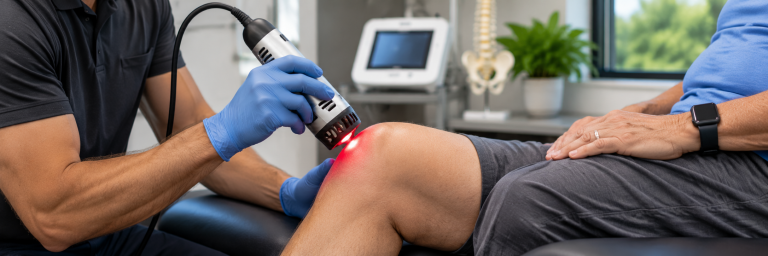
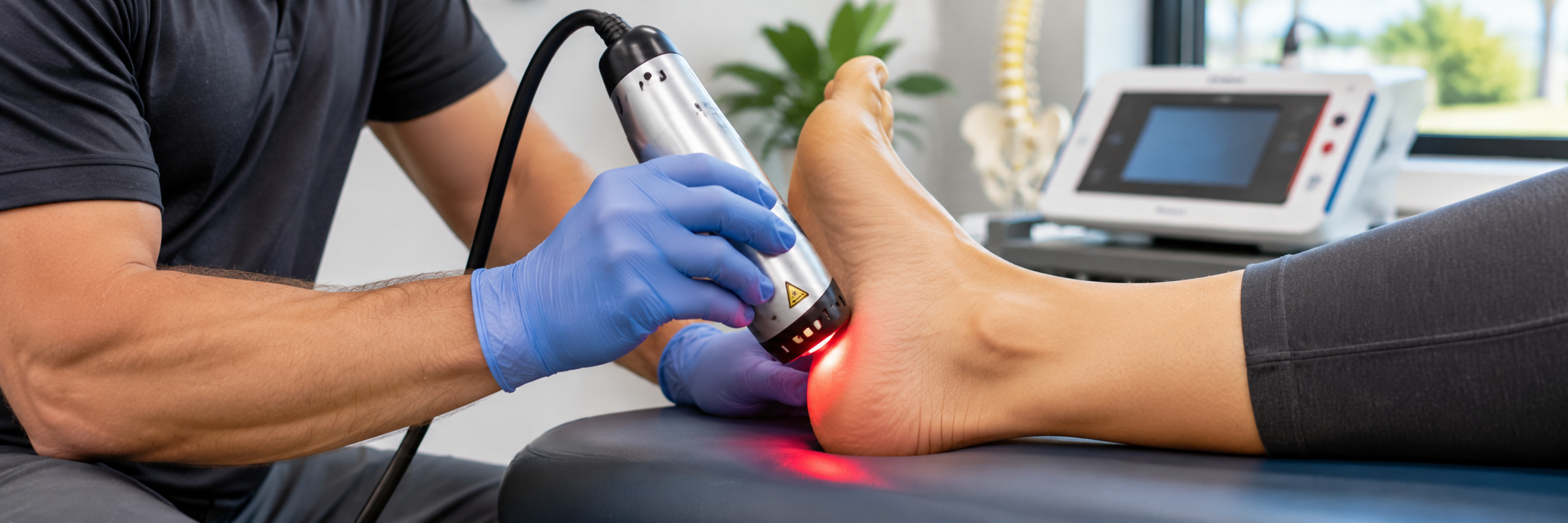
During a Class IV laser session, the provider moves a handpiece over the heel, arch, and sometimes the calf while you feel gentle warmth. Treatment of one area usually takes several minutes, and many plans involve a short series of visits, although the number depends on your exam and response. Everyone in the room wears protective eyewear because the laser beam can damage the eyes. Side effects are uncommon and usually mild, such as temporary warmth or redness, but laser therapy is not appropriate for everyone. Studies have not settled on an ideal dose for plantar fasciitis, so plans are adjusted based on how your symptoms respond over time. Tell your provider about pregnancy, cancer history, medications that make your skin sensitive to light, and any areas of reduced sensation before starting.
• Never aimed toward the eyes, and protective goggles are required
• Not used over the abdomen or low back during pregnancy
• Not used over known or suspected cancer
• Not used over the thyroid gland
• Used with caution over areas with reduced sensation, where heat may not be felt
What Stretches and Home Care Help Plantar Fasciitis on Hilton Head Island?
Home care does much of the heavy lifting. The 2019 American Family Physician review lists activity modification, ice massage, plantar fascia-specific stretching, strengthening exercises, and heel padding as first-line steps, with medication decisions left to your physician. It also notes that off-the-shelf arch supports appear to work about as well as custom orthotics for short-term pain relief. A 2025 American Family Physician summary of physical therapy guidelines adds that strengthening the toe flexors, ankle muscles, and calves improves pain and function more than stretching alone. On Hilton Head Island, walking barefoot on soft sand or wearing flat flip-flops on long bike paths can increase strain on the heel and calf, so supportive shoes and gradual increases in beach walking may help. A corrective exercise program can turn these steps into a daily routine that fits your schedule.
Can Chiropractic Extremity Adjustments Help Heel Pain?
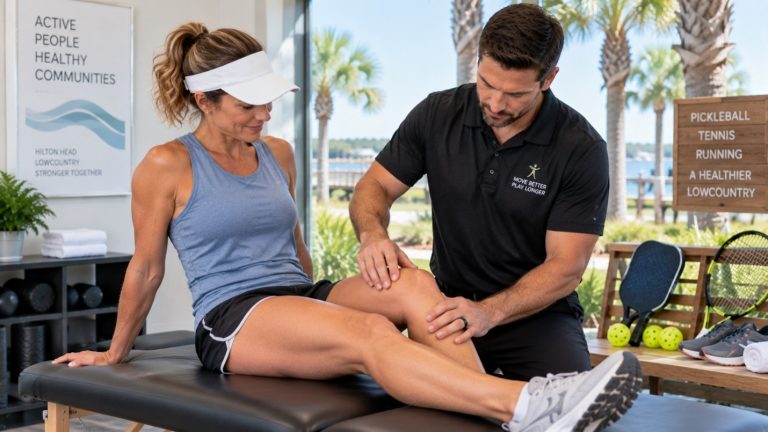
Chiropractic care for plantar fasciitis focuses on the foot, ankle, and calf rather than the spine. Extremity adjustments and joint mobilization aim to improve motion in stiff joints of the ankle and foot, which matters because limited ankle flexibility is one of the strongest risk factors for plantar fasciitis in people who are not athletes. The 2025 American Family Physician summary of physical therapy guidelines reports that subtalar joint mobilization reduced pain and disability for up to three weeks, and that soft tissue work for the deep calf muscles may improve pain and joint mobility for up to six weeks. These effects are modest and short-term, so hands-on care is usually paired with stretching, strengthening, footwear changes, and sometimes laser therapy. A thorough exam also checks the knee, hip, and lower back, because problems higher up can change how you load your feet.
When Should You See a Podiatrist or Doctor for Heel Pain?
Most heel pain is not dangerous, but some patterns suggest a different diagnosis or a problem that needs medical or podiatric care. The 2019 American Family Physician review lists calcaneal stress fracture, nerve entrapment such as tarsal tunnel syndrome, plantar fascia rupture, Achilles tendon problems, and, rarely, bone tumors among the conditions that can mimic plantar fasciitis. It considers imaging reasonable when pain lasts beyond three months despite treatment, often starting with ultrasound and using MRI to look for tears or stress fractures. A podiatrist or physician can also discuss options such as shockwave therapy, injections, or, after other options fail, surgery. If you notice any of the warning signs below, contact a medical provider before starting or continuing conservative care.
• Numbness, burning, or tingling in the heel, sole, or toes
• Heel pain that keeps building with walking or running and hurts when you squeeze the heel
• A sudden pop followed by sharp pain and bruising in the arch
• Deep pain at night or at rest, fever, or a red, hot, swollen foot
• Diabetes with any foot wound, color change, or loss of sensation
• No meaningful improvement after several weeks of consistent home care
How Can Main Street Chiropractic Help With Plantar Fasciitis in Hilton Head Island, SC?
Main Street Chiropractic has more than a decade of experience helping active people in the Lowcountry stay on their feet. Every new patient starts with a detailed health history and exam so our chiropractor can confirm that heel pain fits plantar fasciitis and screen for red flags before recommending care. A plan may combine extremity adjustments, soft tissue work, Class IV laser therapy when appropriate, and home exercises, and results vary. When findings suggest a stress fracture, nerve problem, or another medical issue, we coordinate with your physician or podiatrist. We serve Hilton Head Island, Bluffton, and Sun City, and most major insurance plans are accepted, so ask about yours. Visit us at 92 Main Street, Suite D, Hilton Head Island, SC 29926, call 843-342-3333, or use our online scheduling page. This article is for general information and is not medical advice.
Frequently Asked Questions About Laser Therapy for Plantar Fasciitis
There is no standard number. Published trials used very different schedules and doses, and researchers have not agreed on ideal settings for plantar fasciitis. Many clinics recommend a short series of visits and then reassess. If heel pain is not clearly improving after several sessions combined with home exercises, it makes sense to change the plan or seek another opinion.
Most people feel gentle, soothing warmth during treatment. The provider keeps the handpiece moving to avoid hot spots and adjusts settings if the area feels too warm. Some people notice mild soreness or redness afterward that fades quickly. Tell your provider right away if anything feels uncomfortable, and always keep protective eyewear on during the session.
Research has not shown a clear winner. Both have mixed evidence, and the study methods vary widely. Shockwave therapy is often discussed for stubborn cases that have not improved after months of home care, and it is commonly offered by podiatrists and sports medicine physicians. Your choice may depend on symptom duration, cost, access, and your other health conditions.
Many people can, with some changes. Soft sand asks more of the calf and arch, so shorter walks on firmer sand near the water and gradual increases in distance tend to be easier on the heel. Supportive sandals help between walks. If beach walking reliably makes morning pain worse, scale back and talk with your provider about a plan.
Court sports involve quick starts, stops, and side-to-side movement that load the heel and arch, so sudden increases in play can trigger symptoms. Warming up, supportive court shoes, and building playing time gradually may help. Learn more about pickleball, tennis, and running injuries and how they are managed in the Lowcountry.
No. Laser therapy does not dissolve or remove bone spurs. Heel spurs are common on X-rays, including in people without any heel pain, so a spur alone does not explain symptoms. Care usually targets the irritated tissue and the factors that overload it, such as tight calves, footwear, and sudden changes in activity, rather than the spur itself.